The God Who Covenants - Part 1
Ministries > Unlimited Grace with Bryan Chapell
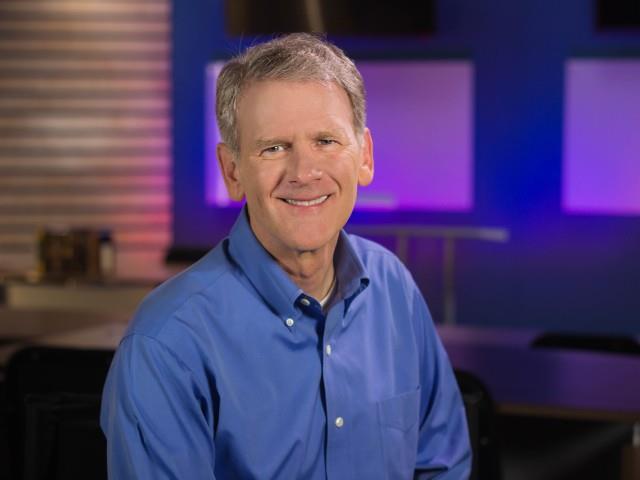
Pastor Bryan shares a lesson from Psalm 132. This Psalm is a hopeful reminder of God’s covenant to His people.
Bryan Chapell: But now they are slaves, remembering. And all that they have left to give them hope, to give them breath for another day moving forward, is a passion for God. They have nothing else. All they have is a passion for God, and what feeds that passion is a deep reminder of his covenant, which is his passion for them.
Guest (Male): So glad you joined us for today's Unlimited Grace, the audio broadcast ministry of pastor and author Bryan Chapell. In today's episode, Pastor Bryan shares a lesson from Psalm 132. This Psalm is a hopeful reminder of God's covenant to his people. You can find this lesson and many others when you visit unlimitedgrace.com. And while you're there, look for Pastor Bryan's book, The Promises of Grace. Dr. Chapell offers a careful look at the beauty of grace and all it brings to believers. These blessings come with the understanding that because we cannot hang on to God, he hangs on to us. Let's hear now from Dr. Bryan Chapell as he shares the lesson, "The God Who Covenants."
Bryan Chapell: So if you're a parent or a grandparent, you know the chant of the child: "Tell me the story again." "But you already know it." "But tell me the story again." That chant had different meaning as it was told recently by Juliet Lu-Wade, who spoke of her and other children talking to their grandmother in a borrowed attic apartment where seven people lived. "Tell me the story again." But said the grandmother in her Vietnamese accent, "You already know it." "We know, grandmother, but tell us the story again." And so she did. Our family had just finished dinner when a loud explosion blew out the windows of our home. Explosions were shaking the street. Our family scrambled outside the house. Bombs were exploding, taking down shops and houses and people. We ducked low, making our way from ditch to ditch, trying to get to the airport. It took all night. There a guard met us at the gate. "Your name is not on the list," he said. "Please," my grandmother begged, "I worked for you Americans. They will kill us all here. Please, take this and let us in." And she shoved into the guard's hand a small package of gold jewelry. He took it all and let them in. They waited with thousands of other Vietnamese on that April night in 1975 that we here still call the Fall of Saigon. As they stood waiting, empty-handed because they were permitted to take nothing, they had no idea of what was to come. They had nothing to show for their lives, no awareness of what the future might be. In the chaos and panic of the airport, the family was divided by guards who wanted to fill the departing helicopters to capacity. The father of the family said to his children and to his parents, "Get on that helicopter." And then in the crush of the crowd, they were separated and the family remaining did not know what had happened. They presumed that a helicopter that immediately left and lurched into the darkness held their family, and for that, they were thankful until the sky exploded in light and the helicopter was struck by a missile. The father who had just put his parents, he thought, and his children on that helicopter looked at the ground and said, "That should have been me." If you can just capture a sense of the horror and the desperation of that moment, then perhaps you can sense why we have Psalm 132 in the Bible. Not just for that time in 1975, for today too. Most of us will not recognize it in our comfort and given the nature of our country and our politics that this is International Refugee Sunday. On this day in our world, there are 65 million refugees. People displaced from their home by war, by conflict, by militancy, by civil war, by famine. It is the largest number of displaced people that we know of in the history of the world and it's happening right now in our time. And if there is ever a heart of people who should yearn to say, "How can we help? How can we be a part? How can we think about sharing the Lord with people?", it ought to be us. Because hundreds of thousands of those who are refugees now, particularly in the Middle East or from the Middle East, are our own brothers and sisters in Christ. Does the word of God have anything for those people, for we people on such a day? Psalm 132 is the word. This is a Psalm written for the people of God as they were refugees, exiles, slaves in Babylon. Removed from their country, removed from their possessions, and now just remembering what it was like to go to those festivals in Jerusalem so long ago where they would sing these songs of ascent, marching up the mountain of Zion, ready to go to the temple of God and sing the wonderful praises. They would sing these songs of ascent as pilgrims marching up the road together. But now they are slaves, remembering. And all that they have left to give them hope, to give them breath for another day moving forward, is a passion for God. They have nothing else. All they have is a passion for God, and what feeds that passion is a deep reminder of his covenant, which is his passion for them. God's passion for his people becomes hope, it becomes life's very breath, and it's all echoed here. What would that passion for God look like? What would it sound like? It would first simply be a faithful memory. The opening words of the Psalm: "Remember, O Lord, in David's favor, all the hardships he endured." Such an interesting place to start that the people are actually asking God to remember his own work. God, remember David? Remember his hardships? He was the king that you anointed. But in his anointing, he had to be removed from his own family. And the king became his foster father. But ultimately that foster father abused him and sought his own life. David goes into the desert, fleeing from Saul, fleeing the Philistines. He knows hardship and heartache. God, remember David. But not just his hardship, remember his heart. For when he became king, verse 2, he swore to the Lord and vowed to the Mighty One of Jacob, "I will not enter my house or get into my bed, I will not give sleep to my eyes or slumber to my eyelids until I find a place for the Lord, a dwelling place for the Mighty One of Jacob." Do you remember what happened? David ultimately became the king. And then had this storm of conscience: "I'm living in a palace, but my God who has delivered me is still living in a tent." The tabernacle is the only thing that the people of God had to worship him. It was glorious, it was wonderful, but it was not reflective of the glory that God himself should have had. And so David vowed a vow, "I'm not even going to sleep, I'm not going to rest until God has a resting place." But then God said to David, "David, you have made your way by war. But my house is the place where people will find peace between themselves and their God. You shall not build my temple, but your son, because we need a man of peace to build a place of peace." And yet, David, knowing that he would not be the primary beneficiary of the building of that temple, gave himself to it. We read there in Chronicles how he began to devote what would in today's terms be millions and millions of dollars to collect iron for nails. Stones were hewn and shaped for the building of the future temple. He collected riches, he bought property so that the temple could have a place on the temple mount. All so that he was preparing for what he himself would not enjoy for the sake of the glory of God and the goodness of future people. It's what some of you have done. The very place that we worship is itself a mark of those who were giving of themselves. Some of you still by estate planning, by giving for the sake of others, are providing for what you yourself will not experience many more years. But for generations to come, for your children and grandchildren, and for the people of God we don't even know, that they would be here is a mark of great heart that God's people would prepare for future peoples. But even as these people are singing and saying, "God, remember the hardships of David, remember the heart of David," it is a statement of remarkable humility. Because even as they are singing to God, imagining what they will say when they return to the land and sing the song of ascent, they're not saying, "God, remember me. God, remember my hardship, remember my toil, remember my righteousness. Remember, we were slaves for you." No, God, remember your covenant with David. Remember you made a way for us. Remember your promise was to David, and David failed terribly, but you swore an oath to him. God, remember your own work. It's the gospel again in the scriptures, if we learn how to look for it. Never do God's people approach him saying, "Look at me. Look at my good works, look at my accomplishments, look at all that I've done for you." But rather God, remember your covenant. You are the one who swore by yourself that you would be merciful. You swore it to David. You said he had to be the one who would provide a place of peace, even though he himself could not provide it. Always there is the message of grace echoing we will see it. God makes a way for those who cannot for themselves, and the heart of those who would be singing the song is reminding them of their humility before God.
Guest (Male): You're listening to Unlimited Grace, the audio broadcast ministry of pastor and author Bryan Chapell. Have you thought about the fullness of God's grace and the role that it plays in your life? You can hear and understand that you are saved by grace. But what other spiritual benefits can an understanding of grace reveal? And what has God promised to believers that his grace will provide? In the book, The Promises of Grace, Pastor Bryan offers a careful look at the beauty of grace and all it brings to you as a believer. God's word does not promise more money and fewer headaches, but his grace provides a confidence in our relationship with him. Pastor Bryan wants to help you focus on the promises that you can expect God to fulfill: promises of assurance of God's love, peace of conscience, joy in the Holy Spirit, and perseverance in trial. You can request your copy of The Promises of Grace when you go online at unlimitedgrace.com or by calling 844-41-GRACE. That's 844-414-7223. And now more from Bryan Chapell on today's Unlimited Grace.
Bryan Chapell: God makes a way for those who cannot for themselves, and the heart of those who would be singing the song is reminding them of their humility before God. But as they go, theirs is not only a faithful memory, it's a faithful walk. That walk is recorded in verses 6 and 7, and it will be hard for this to make sense to you until you remember the family vacation a year or two years ago. When you were just going down the highway and you saw that historical marker and you said, "What's that about?" And you just stopped and you read. Lewis and Clark were here. Daniel Boone was here. Whatever it was, you said, "Oh, I remember that." And that historical marker trigger something in your memory of those past faithful ones. Verses 6 and 7 are something very similar. The pilgrims are on the Psalm of ascent and then they begin to say this: verse 6, "Behold, we heard of it" (that is, the dwelling place that God was making for himself), "we heard of it in Ephrathah, we found it in the fields of Jaar. Let us go to his dwelling place, let us worship at his footstool." The words don't mean much to us anymore. The pilgrims are on their way and they say, "You know, we remember something happened here at Ephrathah. Do you remember? Do you remember when there was that prophecy: 'Blessed are you, Bethlehem Ephrathah, for out of you shall come the Lord's anointed'?" We read it at Christmastime that God had promised to David a seed that would become the savior of the world. And David's hometown was Bethlehem in the region of Ephrathah. And now these people in Babylon, just in their mind's eye or imagining they're walking again on their pilgrimage to Jerusalem and they pass by Ephrathah. "Hey, we remember that God was going to make a dwelling place for himself out of Ephrathah. Bethlehem was God's promise." And not only Bethlehem, but as we're going on our journey, we found it, the promise of God, in the fields of Jaar. Again, it doesn't mean much to us. But there was a time, do you remember, that in idolatry the people of Israel thought that they were going to use the ark of the covenant as just kind of a big rabbit's foot and go into war with good luck. And the consequence was they in their new idolatry were defeated and the ark of the covenant was taken away from the people of God for a generation, residing in the house of Obed-edom in the area of Kiriath-jearim until David reclaimed it. Now you may remember the story of David going back. As he goes back, he begins to dance and sing with joy. He lifted his skirts before the Lord, he was so happy, dancing and singing because he was saying, "The ark of the covenant is coming back. God is coming back for a resting place." And he danced and sang for 11 miles. And in every six steps, they stopped and offered sacrifices as if to say, "Something truly wonderful is happening." What was it? Do you really remember what was in the ark? There were the tablets of the law, that statement of God that "I will make a safe and good path for my people through life if they will follow this law." And indicative of the fact that it was the path, the ark led the people of God through the wilderness into the promised land. There was a path being provided by the ark. And not only a path but provision. Within the ark was the golden pot of manna. When the people of God were in the desert and they could not provide for themselves, God said, "I will give you bread. I'll give you path and I'll give you provision even though you cannot provide for yourselves." There also was Aaron's rod that budded, that mark of deliverance that said, "This is not just for you but for the flowering and flourishing of the nations that will be touched by you." I will deliver Israel, but my ultimate father Israel, Abraham, will be a father of many nations. There is a flourishing that is intended. Not just shall there be path and provision, but multiplication that God intends for his people. But they're not worthy of that. They don't qualify for that. And so these marks of God's provision were put into the ark of the covenant. Guarding it were the cherubim, the angels with the fiery wings. But upon that seat of the covenant, blood was shed every year to say, "God must provide atonement that all of this will be fulfilled." There will be sacrifice because without the sacrifice, the shedding of blood, there is no forgiveness of sin. And God ultimately called that place upon which the blood was shed the mercy seat. Why did David dance when the ark came back? Because he said, "We have been a sinful people, but God is not done." His path, his provision, his mercy are still here that the multiplication for the nations would still occur through the promise of God. David danced for joy to say, "My God is not done." This is not just the story of the past and these people now in exile, they think about going back to Jerusalem, going to ascend the temple of praise, and they who are in exile in slavery say, "But God's not done. This is not the final chapter, this is not the end of the story. God is still working because he has made a covenant promise." And when God's people profoundly believe that God is not done, his power yet works through them. A faithful walk believing that God was not done was taught to Juliet Lu-Wade's family in the unfolding months. After Saigon fell, the family that survived was taken to Guam to await resettlement somewhere. And there through miraculous steps, they found out that the helicopter that had been blown out of the sky did not have any of their family members. The family was reunited. But in Guam, little provided: a bowl of rice and a carton of milk for a whole family each day. Juliet writes of her mother, she began to share her portion of rice with her ill sister until her mother dropped to 90 pounds in weight. Still waiting, still waiting, what would happen? They wanted to go to the United States. Some of you will recognize these words, but anti-war and anti-Vietnam sentiments were so strong nobody wanted the refugees at that time. But she writes: Far away, at a small Baptist church in Lafayette, Indiana, some Christians were convinced that God's heart was for those that nobody wanted. And that little church committed to sponsoring a refugee family. They opened their hearts and their homes to this strange family from a strange land that everybody wanted to forget. And in doing so, that church was also on their own faith walk. "We believe that God is not done. We believe that he can use us. We believe that God's power and presence are yet at work. He will restore his purposes because he is a covenant-keeping God. What he has promised he will fulfill." And because we believe that, we have a passion for God who has a passion for his people. And it is that passion that moved that church to provide for people that they did not know, did not deserve the provision, did not in any way qualify for it. That church, that little church in Lafayette, Indiana, believed that Aaron's staff had budded for a reason and that it was still intended to bud for the flourishing to the nations of the mercy of God. What does faithful memory and a faithful walk lead to? It leads to faithful prayer. That's what that passion for God ultimately becomes. It's reflected in verse 8. These people in exile pray: "Arise, O Lord, go to your resting place, you and the ark of your might." We think about that meaning "settle down" in some way, "go to your resting place." But if God, represented in the ark, would actually rest among the people of God, what would that mean? It would mean the power and the presence of God were yet again in Israel. We pray that too. God, bring your power and your presence here. Rest among us because we know when you rest among us, we are animated for you.
Guest (Male): That's Pastor Bryan Chapell, and you've been listening to Unlimited Grace. If you've been blessed by this message and would like to hear more from Dr. Chapell, I would encourage you to visit unlimitedgrace.com. In addition to messages from Pastor Bryan, you can explore the many sermons, podcasts, seminars, and more available to you. Also, be sure to request a copy of the book from Dr. Bryan Chapell called The Promises of Grace. We'll send you a copy right away as our way of saying thank you for your most generous financial support. Once again, go to unlimitedgrace.com or you can give by calling 844-41-GRACE. That's 844-414-7223. Please be sure to join us next time as once again we endeavor to put Christ at the center of our efforts so that lives might be transformed by his unlimited grace. This ministry is brought to you by Unlimited Grace Media and continues to be made possible with your generous financial support.
Related Episodes
The God Who Refreshes - Part 2
Friday, July 17
The God Who Refreshes - Part 1
Thursday, July 16
The God Who Answers
Wednesday, July 15
About Unlimited Grace
Unlimited Grace is dedicated to spreading the gospel of God’s grace to all people. We desire for believers everywhere to serve God through faith in His grace that frees from sin and fuels the joy of transformed lives.About Bryan Chapell
Bryan Chapell, Ph.D. is the Stated Clerk Pro Tempore of the Presbyterian Church in America (PCA), based in Lawrenceville, GA.
Dr. Chapell is an internationally renowned preacher, teacher, and speaker, and the author of many books, including Each for the Other, Holiness by Grace, Praying Backwards, The Gospel According to Daniel, The Hardest Sermons You’ll Ever Have to Preach, and Christ-Centered Preaching, a preaching textbook now in multiple editions and many languages that has established him as one of this generation’s foremost teachers of homiletics.
Dr. Chapell is passionate about sharing the truth of God's grace with others, because it provides the freedom and fuel for transformed lives of joy and peace.
He and his wife, Kathy, have four adult children, a growing number of grandchildren, and lives rich with friends, fishing and faith.
Contact Unlimited Grace with Bryan Chapell


