Uncivil War
Ministries > Pathway to Victory with Dr. Robert Jeffress

In Romans 6, we learned that Christians are no longer slaves to sin, but are free to live in obedience to God. Yet we still must cope with the constant presence of sin around us. Dr. Robert Jeffress offers an honest look at the spiritual struggle that takes place within.
To support Pathway to Victory, go to ptv.org/donate.
David J. Mullens: Hey, podcast listeners. Thanks for streaming today's podcast from Pathway to Victory. Pathway to Victory is a nonprofit ministry featuring the Bible teaching of Dr. Robert Jefress. Our mission is to pierce the darkness with the light of God's Word through the most effective media available, like this podcast. To support Pathway to Victory, go to ptv.org/donate or follow the link in our show notes. Now, here's today's podcast from Pathway to Victory.
Dr. Robert Jeffress: Hi, this is Robert Jefress, and I'm glad to study God's Word with you every day on this Bible teaching program. On today's edition of Pathway to Victory. And so Paul says, as a Christian, I'm no longer in the flesh, but I'm still of the flesh. There's that uncivil war going on in the life of every Christian. But here's the good news. Even though we will experience this war and struggle until the day we die, it is a winnable war.
David J. Mullens: Welcome to Pathway to Victory with author and pastor Dr. Robert Jefress. In Romans chapter 6, we learned that Christians are no longer slaves to sin, but are free to live in obedience to God. But we still cope with the constant presence of sin all around us. Today on Pathway to Victory, Dr. Robert Jefress offers an honest look at the spiritual struggle that takes place within. But first, let's take a moment to hear some important ministry updates.
Dr. Robert Jeffress: Thanks, David, and welcome again to Pathway to Victory. On today's program, we'll be looking at the seventh chapter of Romans together. In this brilliant passage, Paul answers several challenging questions for his readers. The Roman people were confused about God's law and how it intersected with his grace. And so Paul broke it down for them. And now, this chapter stands as one of the deepest explanations of grace in the entire Bible. In a moment, I'll explain how this first-century teaching from Paul applies to your life and mine. But first, did you know that this coming May 2027, we're embarking on an adventure to trace Paul's footsteps? I'm referring to the Pathway to Victory Journeys of Paul Mediterranean Cruise. The dates are May 14th through the 23rd. For 10 unforgettable days, we'll sail the ancient waters of the Mediterranean and walk the very ground where Paul preached, suffered, and wrote so many of his letters. Imagine standing in the places where the early church was born, and then opening your Bible to Romans or Philippians or Ephesians and reading Paul's words with fresh eyes. Reserve the cabin of your choice today by going to ptv.org. Okay, right now, let's begin today's important study in Romans chapter 7. I titled my message uncivil war. I want to begin today's message by asking you three questions. Question number one, why is it that sex education programs taught in schools without a biblical foundation are just as likely to increase sexual activity among teenagers as they are to decrease that activity? Why is it after a time of spiritual recommitment, such as many of us enter into at the Lord's Supper, when we promise the Lord that we are going to let go of a particular sin in our life? Why is it that within 48 hours we find ourselves committing that very same transgression again? Why is it that after reading a book or hearing a message on self-discipline, we can make a long list of things we're going to do differently in our lives, and within a week we give up on all of them and are back to our old way of living? The answer to all three of those very different questions is the same word. It's the word s i n sin. Sin that is present in all of us. Oswald Chambers once wrote, if we refuse to take the fact of sin into our calculation, refuse to agree that a base impulse runs through men, that there is such a thing as vice and self-seeking, when our hour of darkness strikes, instead of being acquainted with sin and the grief of it, we will compromise straight away, and there is no use battling against it. The apostle Paul said it this way in Romans 7:18. He said, for I know that nothing good dwells in me, that is in my flesh. For the wishing is present in me, but the doing of the good is not. While becoming a Christian destroys the power of sin over my life, becoming a Christian does not remove the presence of sin within my life. And that is the truth that we see illustrated in the passage we're going to look at today. If you have your Bibles, I want you to turn to Romans chapter 7. Today we're going to look at the first 14 verses of Romans 7 in which Paul discusses the subject of the struggle within every believer. And he starts by asking a question that really seems kind of off the wall. In chapter 7, he begins discussing the topic of a Christian's relationship to the law, to the Mosaic law. Now, when he's talking about our relationship to the law, understand this. He's talking about the law given to Moses. Remember the law that was given to Moses and the Israelites had over 600 commands of what to do and what not to do. It also contained penalties, severe penalties for those who did not meet the requirements of the law. So when Paul is talking about a Christian's relationship to the law, he was asking, what is the relationship between a believer in Christ and the Old Testament laws? It's commands as well as its penalties. Look at chapter 7 verse 1. Do you not know, brethren, for I am speaking to those who know the law, that the law has jurisdiction over a person as long as he lives? Now, you say, well, why would Paul even want to discuss this subject? Remember a lot of the audience in Rome were Jews. Some of them were Christian Jews who had accepted Christ. Others were unbelieving Jews. But they all had this question about, okay, if I'm saved by grace, what is my obligation to the Old Testament law now? Because the Jews believe that the law is what made them holy with God. I remember watching a debate between the famous rabbi Harold Kushner and a Christian spokesman on how a person can go to heaven when they die. And this Christian spokesman said, well, nobody can be good enough to go to heaven. Rabbi Kushner responded and said, oh, yes, you can. We can be good enough because God does not demand absolute perfection. Well, the rabbi needs to go back and read his Old Testament scripture. Because in fact, the Bible does demand absolute perfection. The law demanded absolute perfection. Remember Deuteronomy 27 verse 26. Cursed be he that confirmeth not all the words of this law to do them. Not some of the words, all of the words of the law. In Galatians 3, when Paul paraphrased this verse, he said, cursed be everyone who does not obey all things written in this book. God doesn't grade on the curve. He doesn't demand 70 %, 80 %, 90 %. He demands 100 % conformity to the law of God. And that 's why Paul wrote in Romans 3:20, because by the works of the law no person will be justified in his sight. None of us can fulfill the law. All of us deserve the punishment of the law. You say, how can I ever meet the demands of the law? How can I ever escape the penalty for breaking the law? The bad news is we can't. The good news is Christ died. Jesus Christ did two things on our behalf. First of all, he lived a perfect life and fulfilled all the requirements of the law. Secondly, he suffered the penalty we deserve for breaking the law. He fulfilled all of the law. He suffered the penalty we deserve for breaking the law. And when you trust in Jesus as your Savior, when you are placed in Jesus Christ, God looks at you the same way he looks at his son Jesus. When he looked at his son Jesus, he saw somebody who had fulfilled the law. He looks at you as somebody who has fulfilled the requirements of the law. When he looks at Jesus, he saw the penalty he paid for our sins. When he looks at us, he says our sin bill is paid in full. How does Paul answer the question, what is our relationship to the Old Testament law? Here's our relationship to it. We have no obligation to the Old Testament law. We have died to it. Its its requirements have been fulfilled. Its penalty has been paid in Jesus Christ. I am not saying we don't have any obligation to obedience. We have even a greater obligation to obey the New Testament, the New Covenant, the new agreement. But the Old Testament Mosaic law, it has no requirements over us any longer. And that's what Paul is saying in these opening verses of Romans chapter 7. And to show how the law has no authority over our lives now, either its requirements or its penalty, Paul uses two illustrations from everyday life. First of all, he uses the illustration of human law. Go back to chapter 7 verse 1 for a moment. He says, or do you not know, brethren, for I am speaking to those who know the law, that the law has jurisdiction over a person only as long as he lives? You only have to obey human law while you're alive. We have died in a sense to our old way of living. We died when Christ died. He fulfilled the law. We have fulfilled the law as well. So God's Old Testament law, it has no jurisdiction over our life whatsoever. Verses two and three, he uses another illustration to show our freedom from the law, and that is in marriage. Look at verses two and three. For the married woman is bound by law to her husband while he's living. But if her husband dies, she is released from the law concerning the husband. So then, if while her husband is living she's joined to another man, well, she'll be called an adulteress. But if her husband dies, she is free from the law so that she is not an adulteress, though she's joined to another man. A woman is bound by her oath to be faithful to her husband as long as her husband lives. But when the husband dies, that marital obligation ceases. She is no longer bound to her husband. By the way, don't misapply this verse here. Paul is not giving a detailed description of when divorce and remarriage are acceptable and possible. Some people use this verse to say, oh, there's only one instance in which you can remarry, and that's if your mate dies. No, Paul's using an illustration here. He's not giving a teaching on divorce and remarriage. It's interesting that in 1 Corinthians 7:15, Paul gives another instance in which somebody is no longer under the bounds of marriage. Says if your mate deserts you, abandons you, you are no longer under bondage. Not a great description for marriage, under bondage. But that's the idea here. He means not under bondage to the person, under bondage to your marital commitment. If your mate deserts you, you are no longer under bondage. You are free to remarry. It's the same word he uses here. He's saying that if your mate dies, your obligation has been fulfilled. You are free to remarry. In the same way, when you become a Christian, you die to the law. You are no longer bound either to the requirements or the penalties of the Old Testament law. They have been fulfilled in Jesus Christ. You have died to the law. You are free to remarry in a spiritual sense Jesus Christ. And that's what happens when you are saved. Look at verse 6 of Romans 7. But now, we have been released from the law having died to that which we were bound, so that we serve in newness of spirit and not in the oldness of the letter. Now, some people might say, well, wait a minute. Paul, are you saying then that the law is sinful, that it's evil? Oh, no, Paul said. A contrary, he would say to us. The law is good. It is perfect, as Psalm 19 says. Why would Paul on one hand say we've been freed from the law, but the law is good? Well, starting in verse 7, Paul is going to point out three benefits of the law. How the law benefits non-Christians as well as Christians. Beginning in verse 7, he said he's grateful for the law of God, even though he's free from it, because the law describes sin. Look at verse 7. What shall we say then? Is the law sin? Nay, it never be. On the contrary, I would not have come to know sin except through the law. For I would have not have known about coveting if the law had said, you shall not covet. Let's say you love to play golf, or what you call golf, but you you have a different way of playing golf. If the hole is too far down the fairway, you turn around and you aim at a hole closer to you behind you. If you tee up the ball and you miss the ball, you just reach down and you throw it as far as you can. When you come home and your mate asks you, how did you do today? You said, oh, great. Just 300 strokes on nine holes. I mean, in your mind, you're a pretty good golfer. One day you're performing your antics out on the golf course, and somebody comes up to you and says, what in the world are you doing? You say, well, I'm playing golf. And your new friend says, I don't know what you're doing, but that's sure not playing golf. And he explains some rules to you. Or you can't touch the ball. You have to hit the ball within the boundaries of the fairway. There's such a thing called par that tells you the score you ought to be aiming for. And after you learn these rules, you learn what I'm not that great of a golfer. You see, it wasn't those rules that made you a bad golfer. They simply revealed that you're a bad golfer. They described what a good golfer and a bad golfer are. Now, Paul uses that same illustration verse 7. He said, you know, without the law of God, yeah, I would have known kind of that I'm not a great person. I'm not a perfect person. But I never would have known about coveting if I didn't have a law that said, thou shalt not covet. I would have known about immorality if I didn't know God's law that says, thou shalt not commit immorality. He said, I'm grateful for the law because the law describes sin. It showed me God's standard. Secondly, he says not only does the law describe sin, but the law actually arouses sin. It arouses sin in us. When I was growing up, my brother and I had the responsibility of taking care of our lawn at our house. So every Saturday morning, some miserable experience going out and mowing and edging and you know, trimming the hedges. But oh boy, it was so great when we were finally through. Or at least we thought we were through. We were ready to leave and go do our rather fun stuff for the day when my dad would come out and inspect the yard. He said, son, you're not finished yet. We said, all we cut, we edge, we do everything. No. Here's a long leaf bag. You have to pick up the cut grass. You have to pick up the fallen leaves and put them in the bag and take them out back and then you're through. So that was our Saturday ritual. When Amy and I bought our first house, I continued that ritual of mowing the lawn for the first two years of our marriage. But I'll never forget the day. It was a Saturday in July 1979. I was standing out in the middle of the yard having finished sweating profusely when I made a vow. I said, I am never going to mow another yard again. I don't care if we don't have food or furniture. We're hiring somebody to mow the lawn from this point on. I felt like Scarlett O'Hara. I'll never be hungry again. I said as God is my witness, we will never mow another lawn again. And so since that time 1979, we've always had somebody mowing our lawn. We had somebody the other day mowing it. But you know, in 30 years of having yard people working our yard, I've noticed something. I've never seen a yard person carrying a lawn leaf bag. Have you? They never carry them. I mean, they cut the grass. They edge the grass. It's all sitting there. The leaves are sitting there. You know what they do instead of putting it in the lawn leaf bag? They pull out this little machine called a blower, and they just blow it all around. They stir it up. Now, they don't create the cut grass. They don't remove the cut grass. They just blow it around so that everybody can see it and then ask for their check. And as I was watching them do this this week, I said, that's what Paul is talking about in verses 8 to 12. He's talking about what the law does. The law doesn't create sin. It certainly doesn't remove sin. It just blows it around where everybody can see it. Look at what he says in verse 8. But sin, taking opportunity through the commandment, produced in me coveting of every kind. For apart from the law, sin is dead. It's not that it's not existent. It's dormant. And I was once alive apart from the law, but when the commandment came, sin became alive. And I died. And this commandment which was the result in life proved to result in death for me. Look at verse 11. For sin taking opportunity through the commandment deceived me and through it killed me. So then, the law is holy and the commandment is holy and righteous and good. The law doesn't cause sin. It stirs it up inside of us like a leaf blower. It agitates what is dormant inside of us. Thirdly, he said the law not only describes sin and arouses sin, it reveals sin. Some people would say, well, if the law stirs up sin, why don't we just get rid of the law? Let's get rid of all rules and commandments and we won't have any sin. Interestingly, not only non-Christians or some Christians who argue that way tell, we've got too many rules and regulations. Let's just not have the law at all. Paul said, no, no, don't misunderstand. The law isn't causing the sin. It's simply revealing the sin. Look at chapter 7 verse 13. Therefore did that which is good become a cause of death for me? No. May it never be. Rather it was sin in order that it might be shown to be sin by affecting my death through that which is good, that through the commandment sin might become utterly sinful. Now, remember Paul is talking about a non-Christian. He says for a non-Christian, the law describes sin. It arouses sin. It reveals sin. But then when we get to verse 14, Paul changes from the non-Christian to the Christian. And he says the same benefits to the non-Christian of God's law are also at work within me. Look at verse 14. For we know that the law is spiritual, but I am of flesh. Sold into bondage to sin. Now, I want you to underline that phrase of flesh. What is Paul saying here? He's not saying he is in the flesh. There's a difference between being in the flesh and of the flesh. The non-Christian is in the flesh. Look at verse 5 of chapter 7. For while we were in the flesh, the sinful passions which were aroused by the law were at work in the members of our body to bear fruit for death. You know what it means to be in flesh? It means the flesh is all you have. There's only one force working in your life. The force of sin that is pulling you downward and ensuring your condemnation by God. There's only one set of desires. There's only one operating system, if you will, at work in your life. And it's the operating system of sin. You are not able not to sin. But when you become a Christian, God places a new operating system within your life, so to speak. A new power. The power to say yes to God and no to the flesh. But there's one part of you that has not been redeemed. And it's your body. It's the flesh where those sinful desires still reside. And so Paul says, as a Christian, I'm no longer in the flesh, but I'm still of the flesh. There's that unredeemed part of me with which I struggle and will struggle until I die. Skip down to verses 22 and 23. Paul talks about this conflict. He says, for I joyfully concur with the law of God in the inner man. In other words, the real Paul, the real inner man of Paul has been sanctified. The law of God resides in him and he wants to obey that law. For I joyfully concur with the law of God and the inner man, but I see a different law in the members, the parts of my body waging war against the law of my mind. Paul says there is an uncivil war going on in the life of every Christian. But here's the good news. Even though we will experience this war and struggle until the day we die, it is a winnable war. No matter what private battle you're fighting today, God promises victory to his children. You're fighting a winnable war. Isn't that good news? The struggle you feel against sin isn't a sign that something's wrong with you. It's a sign that God's spirit is alive and at work within you. The fight itself is evidence of the new life you have in Christ. So don't grow discouraged. Don't surrender. The very same power that raised Jesus from the dead lives in you, and it guarantees the outcome. This is a battle you were made to win. At Pathway to Victory, we give ourselves to teaching these liberating truths boldly because we believe people deserve the clear, unfiltered truth of God's word, the kind that sets them free. And when you give to Pathway to Victory, you're the reason we can keep doing it day after day. Let me invite you to consider something that multiplies your impact. Would you become a Pathway partner? A Pathway partner is someone who gives an automatic monthly gift to support this ministry. It's the single most powerful way to help us reach more people with the truth. I'd be so grateful if you'd join us. And when you give today, I'll send you my brand new book Divine Invasions. It took real boldness to write a book on a subject so often misunderstood and so easily abused. But I was convinced our generation needs it. In these pages, I'll help you recognize the ways God still moves in your life. Please hurry. This offer ends tomorrow. Get in touch with us today. Here's David with all the details.
David J. Mullens: You're invited to request a hard cover copy of Dr. Jefress's brand new book Divine Invasions when you give a generous gift to support the ministry of Pathway to Victory. Just call 866-999-2965. Visit ptv.org or text PTV to 78800. And when your gift is $100 or more, we'll also send you in addition to the book this month's teaching series on audio and video disc along with the companion study guide. To request these resources, call 866-999-2965 or make your request online at ptv.org. You could always write to us if you'd like PO Box 223609 Dallas, Texas 75222. That's PO Box 223609 Dallas, Texas 75222. I'm David J. Mullens. 2 Corinthians 5:17 says that born-again Christians are like new creations. But if that's the case, why do we still fall prey to sin and temptation? Discover how you can have victory in the war within. Friday on Pathway to Victory.
Announcer: Pathway to Victory with Dr. Robert Jefress comes from the pulpit of the First Baptist Church of Dallas, Texas. The apostle Paul sailed these waters, walked these streets, and the church was never the same.
Dr. Robert Jeffress: I'm inviting you to follow in Paul's footsteps on the Pathway to Victory Journeys of Paul Cruise through the stunning Greek islands into ancient Ephesus and many other destinations as well. This is purposeful travel at its finest.
Announcer: Set sail May 14, 2027. Call 888-280-6747 or visit ptv.org.
David J. Mullens: You made it to the end of today's podcast from Pathway to Victory. And we're so glad you're here. Pathway to Victory relies on the generosity of loyal listeners like you to make this podcast possible. One of the most impactful ways you can give is by becoming a Pathway partner. Your monthly gift will empower Pathway to Victory to share the gospel of Jesus Christ and help others become rooted more firmly in his word. To become a Pathway partner, go to ptv.org/donate or you can follow the link in our show notes. We hope you've been blessed by today's podcast from Pathway to Victory. Oh, and one last thing before we go, don't forget to reserve your spot on the 2027 Journeys of Paul Mediterranean Cruise. Now, you've heard me and Dr. Jefress talk about this Bible Conference at Sea. And cabins, well, they're going quickly. Just picture yourself aboard the beautiful Celebrity Infinity sailing round trip from Athens. Now, each day you'll gather for biblical teaching, worship, and fellowship. And then you'll step ashore to stand where Paul stood in Ephesus and walk the streets of Thessaloniki where his letters still speak to the church today. Nine unforgettable nights with more biblical destinations along the way. Every meal prepared, every detail taken care of, plus the joy of traveling with like-minded believers. There's also an optional pre-cruise extension in Athens. To book your spot, go to ptv.org.
Related Episodes
Take Me to Your Master
Wednesday, October 28
Christian, Thou Art Loosed!
Tuesday, October 27
One for All
Monday, October 26
Related Videos
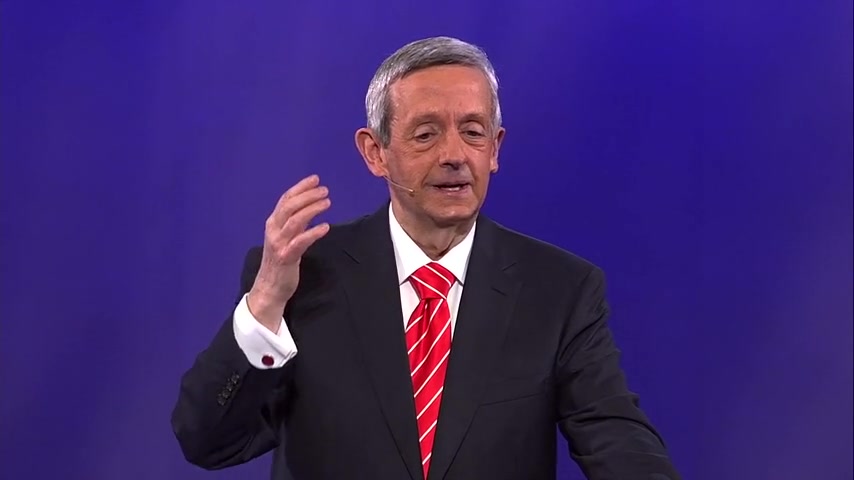
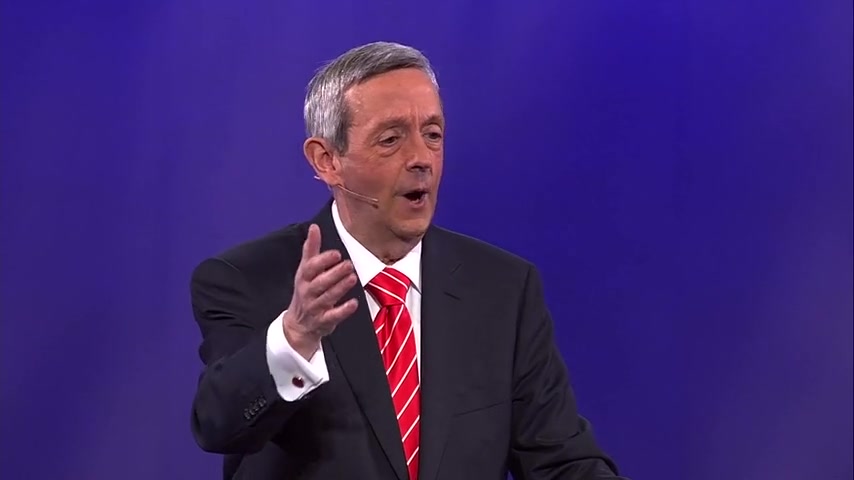

About Pathway to Victory
On each daily broadcast, Dr. Robert Jeffress provides practical application of God's Word to everyday life through clear, uncompromised Biblical teaching. Join him today on the Pathway to Victory!
About Dr. Robert Jeffress
Dr. Robert Jeffress is Senior Pastor of the 16,000-member First Baptist Church of Dallas, Texas. Dr. Jeffress is a FOX News contributor and appears regularly on FOX News Channel’s FOX & Friends , FOX News @ Night , Hannity , and The Faulkner Focus and on the FOX Business Network. Dr. Jeffress has made more than 4,000 guest appearances on television programs that include HBO’s Real Time with Bill Maher and Trinity Broadcasting Network’s Praise .
Established in 1996, Pathway to Victory serves as the broadcast ministry of Dr. Jeffress and exists to pierce the darkness with the light of God’s Word through the most effective media available. The daily radio programs air on over 1,100 stations, and the daily television program can be seen on over 11,000 cable and satellite systems, including Trinity Broadcasting Network (TBN), where it has been the #1 most-watched program since 2020. Pathway to Victory broadcasts are translated into seven languages and reach 193 countries throughout the world in addition to all major markets in the USA.
Contact Pathway to Victory with Dr. Robert Jeffress
Mailing Address
Pathway to Victory
PO Box: 223609
Dallas, TX 75222-3609
Telephone Numbers
Customer Service: 214.969.2400
Toll-Free Radio Offer: 866-999-2965


