Grieving the Loss of a Beloved Family Member
Ministries > Focus on the Family with Jim Daly
The unexpected loss of a beloved family member can shake your world — and your faith! We’ll examine how to navigate grief in healthy ways and trust God in the process, and why community support is vital to your recovery.
John Fuller: This is John Fuller, and please remember to let us know how you're listening to these programs, on a podcast, app, or website. Today on Focus on the Family with Jim Daly, we're going to be exploring a really tender topic, and it's going to affect all of us at some point. The topic is illustrated by a quote that was attributed to Jamie Anderson, who said, "Grief, I've learned, is really just love. It's all the love you want to give but cannot. All of that unspent love gathers up in the corners of your eyes, the lump in your throat, and in that hollow part of your chest." Well, thanks for joining us. Your host is Focus President and author Jim Daly, and I'm John Fuller.
Jim Daly: John, I think grief is such a powerful and sometimes overwhelming emotion. It's one, to be honest, that I don't like going over to that door. I don't like opening it. Jean and her family have had significant issues occur, and she's taught me a lot about going to that door. I think one of the more fearful times in my life when she was at her depth of grief after losing her brother, and I was like, "Let's get going, we got to pick ourselves up and go," and she looked at me and said, "You know what? Not everybody's wired like that. You got to sit with me here in my grief." It freaked me out. Seriously. I was like, "I don't like doing that. I don't want to do that. And why don't you come with me and we'll keep moving?" And so it's been a really interesting experience for me to just do that as best as I could as imperfectly as I did it. You know the scripture, Isaiah 53 says, "He has borne our griefs and carried our sorrows." Isn't that awesome? And another great scripture that I love is Psalm 34:18, "The Lord is near to the brokenhearted and saves those crushed in spirit." So there's something about this life that grief almost lays the groundwork for our receptivity to the Holy Spirit and the Lord's work. It's a humbling thing, and I'm very anticipatory about this discussion today and how it's going to help many, many listeners.
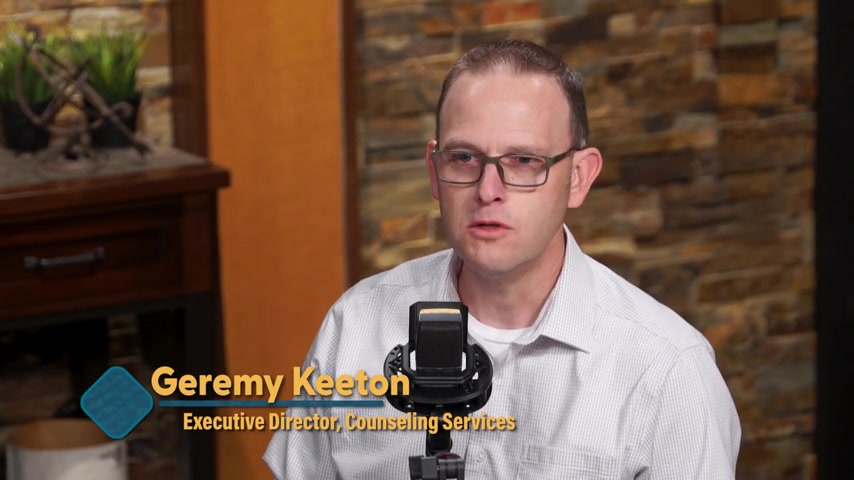
John Fuller: Yeah, we have a couple of really great guests to help us do this. Your sister-in-law, Jane Daly, is back here with us. She's the author of 16 books, and one we're going to hear more about today is called *Hole in My Family Portrait*. We've also invited our colleague Jeremy Keaton into the studio. Jeremy is a marriage and family therapist and heads up our counseling team here at Focus on the Family. Now, both of these guys have great, powerful personal stories about grief. And if that's something you're going through right now, please reach out to us. We have a team of caring Christian counselors here, and it would be an honor to talk with you, listen to where you're at, pray with you, and they are a phone call away. Our number is 800, the letter A, and the word FAMILY.
Jim Daly: Jane, welcome back. It's always good to have my sister-in-law here. 16 books?
Jane Daly: 16.
Jim Daly: Wow, you've written more books than I have. I am going to bow to you, oh author.
Jane Daly: Finally! You've been waiting for that day!
Jim Daly: Let's call my brother, we'll all celebrate. Jeremy, it's good to have you in here too.
Jeremy Keaton: Jim, it's good to be here. I've loved growing up at Focus on the Family in my career. 25 years here, it's just special to be a part of what we do here.
Jane Daly: The loss is universal. Everyone is going to experience loss at some point in their life.
Jim Daly: That is true. We often say that here as well. Jane, let's get into it. Let's start with your story, which involves your son, my nephew Bobby, who I often said, "Bobby, that's the one family member I would definitely hire. That guy was good. He was a hard worker, just a really great guy." But you describe him.
Jane Daly: All of that, and he was also really difficult to raise. I often said that if he would have been born first, he would have been an only child because he was so strong-willed. But I think that that strong-willed personality was what drove him to be successful as an adult in his chosen field, which was to do home theater and wiring stuff.
Jim Daly: He did our home.
Jane Daly: He did. And he had a great personality. He was funny. The thing that warmed my heart as a mom is that he seemed to befriend those who were maybe a little awkward, maybe not in the same social circle as he was because he was so popular. I remember that about him. That's the thing that stands out, is that he wanted to make those people part of his group, to make them feel special.
Jim Daly: He hit somewhere around 17, and what happened? He encountered some peculiar things.
Jane Daly: He did. He was complaining about some pain in his back. He was a football player, so pain in the back was normal. You're going to experience a lot of pain when you're getting hit. But he also said, "Hey mom, I've got these swollen glands in my neck." I said, "Well, don't worry about it. You probably have a cold. Just tell the doctor when you go in for your physical." So he went in for the physical and the doctor was alarmed. Mike took him, which was good, but they did some biopsies and it came back as being stage 4 Hodgkin's, which was kind of just pulled the rug out from under us. Why would our son at 17 be diagnosed with cancer?
Jim Daly: In that journey, just that portion of it, how did that communicate to you faith-wise? Did you have the fist to God, saying, "God, how could you do this to me?"
Jane Daly: It wasn't so much of anger, it was more confusion because we had been going to a church at that time that was very much you lay hands on somebody and they are healed. And if they're not healed, you obviously missed something in your faith journey. You didn't pray hard enough. You didn't cover your son with prayer. You missed something. So there was a lot of my faith was questioned, I questioned my faith in that. How could this have happened when I was so diligent to read the Bible, tithe, pray? How could this have happened to our family?
Jim Daly: And that quid pro quo, it's not just you that has done this. We all do that to a degree. If we're performing for the Lord, won't he reward us with a peaceful life? Our children shouldn't get cancer.
Jane Daly: Exactly.
Jim Daly: And in that context, how did you begin to process that then? How did that get better for you or more understandable?
Jane Daly: It took at least a year of just not attending church, of stepping back from anything that had anything to do with the Lord. And it was through some friends of ours who met with us and said, "Talk to us about what's going on. Talk to us about the journey." And they helped us heal. They helped us see that God is not waiting for us to perform, he is a God of grace. And that helped.
Jim Daly: Well, and I would think in that context, do we really believe God is there, that he's in control, and that he loves us, right? But it is destabilizing because when these things happen, we don't feel that way, like, "God, if you loved me, this would not happen to me."
Jane Daly: Exactly.
Jim Daly: And then you've got to try to find a way to square all of that in your theology, your walk here on this earth.
Jane Daly: Especially if you feel like, as I did, I've done everything I need to do. I've been a good Christian. I have tithed. I have prayed. I have read the Bible. I have... my husband was a pastor. My husband was a pastor, so goodness and mercy shall follow me all the days of my life.
Jim Daly: So 11 years in after this Hodgkin's diagnosis, another blow. What happened? Bobby was moving along, got married.
Jane Daly: He called us one evening and said, "I've been having trouble breathing and not really sure what's going on. I'm going in for exploratory surgery." CT scans and MRIs can't figure anything out. That was the blow because that's the phone call you don't want to have when you are waiting kind of with the other shoe to drop. And so I ended up flying out here. He went into exploratory surgery and it ended up he had a very rare form of sarcoma in his chest, and it was inoperable. So that was the second blow.
Jim Daly: And that eventually was the thing that took his life.
Jane Daly: About a year later.
Jeremy Keaton: I just want to comment on listening to Jane's story, the importance of connecting with people and caring for people, the power of friendship and patience and not rushing people, not giving trite answers is so important when you're experiencing people in shocking loss, in hard loss, and being able to be equipped to do that as God's people.
Jim Daly: And it's so difficult because it's not something we study. It's a life moment, and we're not skilled at it.
Jeremy Keaton: We live in a grief-illiterate culture, as a lot of grief specialists will say. And we're not comfortable and, Jim, your response like you said earlier, it's not comfortable to be in that. And it's not normal or easy to want to grieve, it's why you have to be intentional and choose it. And you don't want it to overwhelm or consume you, and yet it's so important it can be transformative. It can be a depth of connection with God that we don't avail ourselves to because in our microwave society, we want to pack it up and just move forward only. And again, that's important. I mean, I know your story, Jim, moving forward has been a gift that God gave you. And yet your wife also is a gift to you as well and rounding that out and learning how to sit in something that wouldn't be what you choose and meeting God in that is powerful.
Jim Daly: Let's turn to your story and what happened in your family. Why don't you give us that high-line view?
Jeremy Keaton: You could have told me that my family would get in a spaceship and travel to the moon, and I would have believed that more than what actually happened. And that's that my father died of suicide after some very elongated few years of mental illness, COVID events in our family, losses, his own perhaps his brain being probably affected by COVID, very uncharacteristic behaviors for a period of time. It's hard to talk about that because that's really not who he was in the least. This joyful Christian man devoted to his family, serving his community, that's who he was. And yet life has some unexpected and mysterious things in it. And at the end, in physical illness and in weakness, he was called by the Lord in that moment in time when he did end his life, but so uncharacteristic of the rest of his life.
Jim Daly: These are all the difficulties that families face, the grief that we will face. Jane, as you said, that moment will come for everybody, the loss of a loved one, a spouse, a child, a parent, and it's just part of what we go through in this life. And again, God uses those things to help us tenderly look more deeply into what we are, how we're created, what we're about. Look at David in the Psalms. Wow.
Jane Daly: That's the goal though. That is the goal. It's not to get stuck and to just wallow in that grief forever, but it is hopefully a catalyst to turn you closer to God, which I think I experienced. Hopefully. The first time when Bobby was diagnosed, no, I withdrew from God. But the second time I leaned in because I really wanted to see, "What are you doing with this, Lord? Because do I believe everything that I've been taught, that God is good, that God is sovereign, that God is great, and that he loves me? Do I believe that? Can I believe that in seeing my son at 30 years old die?"
Jim Daly: But what is the honesty in the feeling though? Like, "No, right now it doesn't feel that way." And that's a very honest response. So how do you crawl your way back? In fact, Jeremy, you pointed out the five needs that we have and why they're significant. What are those five needs?
Jeremy Keaton: Grief specialist David Kessler talks about our needs in grief. In grief, we need to have it witnessed. We need to be able to speak about our grief and have safe people to witness that. And we also need to express it in our emotions. We need to be able to express grief. To be free of old wounds is a big one. As you go through the journey, what are the what-ifs? What are the bargaining with God? What are the old wounds that need to be really addressed and resolved? And that's where counseling can be of help. And then to integrate the pain and loss into your story. It's part of life, it is part of our story now. It's not who I am, but it's part of how God is shaping me to integrate that. And then to make meaning. The fifth is really significant. How will I make meaning of this? And as believers in God and with the scripture and with truth, we have something that others don't necessarily have if you don't know the gospel and the character of God personally. So making meaning in our faith is powerful. Those are the five areas, Jim.
John Fuller: Yeah, and we'll have resources for you if this is something touching where you're at or you know somebody who's going through grief right at our website. This is Focus on the Family with Jim Daly and we're talking today with Jeremy Keaton and Jane Daly and exploring grief and sadness and loss. And as we indicated earlier, we're here for you. Our number is 800-A-FAMILY or you can stop by focusonthefamily.com/broadcast. Jeremy, as you're talking, and I'd love your perspective too, Jane, everybody grieves differently. We've established that and I've seen that in our own family's losses. How do I know if I'm stuck and how do I know if I'm actually moving in the right direction? Like, how do I know when to let go and move on? There's no real easy answer here, but what's your experience and insight on that?
Jeremy Keaton: Grief doesn't have a script, and so you said it well. I think the important things are that you are choosing to connect with others, not isolating.
Jim Daly: Jeremy, let me interrupt there. That can be difficult. How important is it to press through that kind of self-restraint where you don't feel like it? You're in this cocoon, you're comfortable there, you're healing there. How do you find the gumption, if I could use that word, to press out, to go out with friends at a certain point? How do you know when it's right? Right, I mean, you're opening yourself up to those terrible add-ons like, "I'm so sorry." Let's just stop there, but everybody adds on, "He's in a better place." All the things we shouldn't say.
Jeremy Keaton: It's very important that you have and identify who is safe and who you could be comfortable with. And if that's just one place and one person to start with, start there. And hopefully you might find that in the church, maybe professional counseling, a Christian counselor, someone who specializes in meeting people right where they are. Reading a book like Jane's, having that... that's why you wrote your memoir, so that people can say, "I'm not alone." The point of grief isn't closure and getting past it, it's connection. And so finding something you can connect with. That's why we're doing this program, right? Your grief needs to be witnessed and expressed, so find the one place you can start. And even if that is professional help, there's GriefShare groups, there's somewhere. And I know, Jane, you benefited from that, the GriefShare. You may want to comment, find somewhere where somebody gets you and start there.
Jim Daly: Before you do, and we're going to get to that GriefShare site that I think you engaged with, but you lit up there with the things people shouldn't say. I saw you kind of jump out of your seat. But part of it is how do you ready your own soul and your own emotions knowing that people are going to say things that are really not helpful?
Jane Daly: I don't think you can ever ready your soul. I had that and it I got angry because I didn't think he was in a better place. Right, of course he was. I knew I had the assurance that Bobby had an eternal life. But when people said that, it made me mad. And the other thing that I hope that people understand this is that I don't want to talk about how he died. And it's almost like people want assurance, "Well, that's not going to happen to me." He died of cancer. I would rather talk about what was he like? So what I've learned is going through the process when I meet somebody who says, "Oh, I can relate, my child died," tell me about your child. I found that people that I know said, "Well, I didn't want to ask you because I didn't want to make you sad." Well, I'm going to be sad anyway. So go ahead. Talk about those great attributes, what he was, who he was, what he enjoyed. He was fun, he was witty, he was cutting sometimes, but always in a funny way. But the GriefShare thing is so when you talk about being ready, Mike and I started attending a GriefShare group and after two weeks we just said, "It is way too early. We are not ready for that." So we waited an entire probably six to eight months where we then started another GriefShare group and it was time. It was like, "Okay, now we can talk about it. We can share with others and find those people who we feel safe with." And that did bring you a sense of comfort and I won't say closure, because there is no closure.
Jeremy Keaton: No comparison is important, and being able to be in your story and have empathy for others and others to have empathy for you, that's what's key. And you do have to be braced for different responses and be gracious with others as much as and gracious with yourself.
Jim Daly: And to defend those people, they don't know. They haven't gone through it either probably. They've never sat and really thought about, "What do I do for a friend who's grieving?" I mean, you've got to be patient and think about that. Be ready with a scripture too, but it's not something we encounter all the time.
Jeremy Keaton: Well, we want control and answers and to put a bow on it. And that's again, to be gracious. We're all looking for, "Are we okay in this world?" So death is not what we were made for, loss is not what we were made for. And so it's in a sense human and natural to have some discomfort with it. So that's normal.
Jim Daly: Jeremy, talk about the three Cs of getting through grief. Let's make sure we hit those here.
Jeremy Keaton: There's three practical things: choose, connect, and communicate. So choose how you will handle the hard days. The holidays, for instance. My dad died a little before Thanksgiving and, you know, the first year and the first couple rounds of holidays, not comfortable. And at the same time, we chose what we were going to do together. You choose what you're going to do. Think ahead. And then connect with people, continue to build bonds and nurture bonds. Isolation is one of the worst things for you. And so where you can connect, and it doesn't, you know, just choose where you can connect, choose what you can do versus what you can't do. And then communicate with others what your intentions are. I'm going to communicate, "Hey, I'm not ready to attend that yet, thank you for inviting me. I hope I can in a few months." Communicate where you are in that way.
Jim Daly: Jeremy, let me ask you this because we're right at the end here and it's so important: the spiral of depression. I mean, this can build on itself in a very negative way. This bad result, this bad situation that occurred, loss of a loved one, and then it can spiral into other things. What are some of those signs that we need to be aware of in our own hearts but also with those we love around us if they go through some difficulty? What are signs that we should be watching for in ourselves and in those we love to say, "We better get some help"?
Jeremy Keaton: There's a quote, again, David Kessler, "What we run from pursues us. What we face transforms us." So one sign would be if you know that you're saying, "I don't want to face it, I'm not going to face it, I'm not going to look at it, not going to look at it," and it will pursue you. And so having it's kind of like climbing up the high dive. You ever do that as a kid, the high jump, and it's like, "I think I can do that," and you get up and you look down and you're like, "Nope, not jumping off this." It's having someone in the Lord Jesus and the Holy Spirit as your helper to climb the high dive and say, "I'm going to dive into what I need to rather than avoid." And so some of the obvious clinical body depression things where you want to watch for signs of "I'm not eating, I'm not drinking, or I'm overeating, or I'm using substances, or I'm escaping, or I'm numbing out." These are things that you want to get some attention on and help from. If you see that either over or underindulgence, sleep issues, all of those things that can get into your body and your biochemistry and turn into a clinical depression. Self-care is so important and giving yourself permission. I took extra space and time in this last year, had a lot of conversation, did journaling. That tenderness with yourself and if you're ministering to somebody in grief, just being extra empathetic and tender with the space and the time they need.
Jim Daly: Kindness and gentleness. Sometimes all you need is just somebody to sit with you and not to give you any platitudes but just to sit with you and be sympathetic or empathetic. Let's end here, Jane. Psalm 23, especially verse 4, meant a lot to you. That's the great poetic verse of "Though I walk through the valley of the shadow of death, I will fear no evil." How did that speak to your heart in Bobby's situation?
Jane Daly: I dwelt a lot in that particular Psalm because it was I walk *through* the valley. I walk through. I'm not staying there. I'm not going to live here. I will stay here maybe for a year, but that's it, then I'm walking through. And that death is a shadow. Death is a shadow. It's not the real thing. The real thing is the eternal life that we have after this life is done. That Psalm was really my comfort.
Jim Daly: Yeah, especially to look at it in that kind of detail and understand it, how to apply it in your own life. That's so much of scripture, right? "How does this affect me? How does this speak to my heart in my situation?" And that's a great way to read the Psalms particularly. Man, this has been really good. It has flown by. Always the beauty in the Christian community to want to be able to help others that are going through that shadow, right? That valley. So thanks for being with us, both of you.
Jeremy Keaton: And I just want to say that joy and sorrow both can coexist. It's not either-or. It's not like when you're in mourning that you can't also be in the richness and the joy in the friendship of the Lord.
Jim Daly: So very good. This is the book, Jane's book, *Hole in My Family Portrait*. We do have that hole in our heart too as our nephew, and he was a good guy. And your dad, I'm sure, I didn't meet him but I'm sure he was as well, obviously. And these are the things where life takes us out somehow, some way. And then those of us that are still here have to deal with that. So appreciate it. And I think you get the spirit of this. We're here to help. This is Focus on the Family's mission every day when we walk in. Jeremy and his team in the counseling department literally think of them as waiting for your phone call. So avail yourself to Focus on the Family. I believe I can say we will help you. And I don't know what that'll look like, but I do believe in the team and our ability to deliver that help in Christ. And if you know somebody who's in this situation, a family member or friend, get a copy of Jane's book as a way of helping them begin that healing journey. We do it very simply. Make a gift of any amount, five dollars, ten dollars. If you can't afford it, we'll trust others will cover the cost, just let us know that you need it and we'll get it to you. And that's our way of investing in you.
John Fuller: And the starting point is to call 800, the letter A, and the word FAMILY, or go to our website, focusonthefamily.com/broadcast.
Jim Daly: John, let me share a comment we received from a woman named Evelyn, who contacted our counseling team. Evelyn said, "Thank you for all the help you've given me. I was stuck, but I am now on the right path. I am able to love the Lord as I always have and I'm drawing closer to him every day. Thank you for helping me get on the right path, loving my Jesus." That is incredible. And that's what happens, folks, when we work together to bring God's goodness to hurting families, hurting people. Your gift today can help more people like Evelyn, people who need a lifeline of hope and healing and our Lord.
John Fuller: Well, we look forward to hearing from you. Our number again, 800, the letter A, and the word FAMILY, or online at focusonthefamily.com/broadcast. And thanks for joining us for Focus on the Family with Jim Daly. I'm John Fuller, inviting you back next time as we once again help you and your family thrive in Christ.
Guest (Male): Chat GPT and AI can offer you ideas and attempt to give you answers, but it can't listen with compassion, pray with you, or offer biblical wisdom. Real connection is what brings true hope. Focus on the Family offers a free confidential consultation with a Christian counselor to guide you and help you find hope with whatever you're facing. Go to focusonthefamily.com/gethelp or call 800-A-FAMILY. That's 800, the letter A, the word FAMILY.
Related Episodes
Accepting What You Can’t Control – II
Wednesday, September 16
Accepting What You Can’t Control – I
Tuesday, September 15
Practical Advice for Newlyweds from a Seasoned Wife
Monday, September 14
Related Videos
About Focus on the Family
We want to help your family thrive! The Focus on the Family program offers real-life, Bible-based insights for everyday families. Help for marriage and parenting from families who are in the trenches with you. Focus on the Family is hosted by Jim Daly and John Fuller.About Jim Daly
Jim Daly
Jim Daly is President of Focus on the Family. His personal story from orphan to head of an international Christian organization dedicated to helping families thrive demonstrates — as he says — "that no matter how torn up the road has already been, or how pothole-infested it may look ahead, nothing — nothing — is impossible for God."
Daly is author of two books, Finding Home and Stronger. He is also a regular panelist for The Washington Post/Newsweek blog “On Faith.”
Keep up with Daly at www.JimDalyBlog.com.
John Fuller
John Fuller is vice president of Focus on the Family's Audio and New Media division, leading the team that creates and produces more than a dozen different audio programs.
John joined Focus on the Family in 1991 and began co-hosting the daily Focus on the Family radio program in 2001.
John also serves on the board of the National Religious Broadcasters.
Contact Focus on the Family with Jim Daly
Mailing Address
Focus on the Family
8605 Explorer Dr.
Colorado Springs, CO
80920-1051
Toll-free Number
(800) A-FAMILY (232-6459)


