A Republic Must be Stewarded
BreakPoint Daily Commentary

Audio By Carbonatix
By John Stonestreet, Crosswalk.com

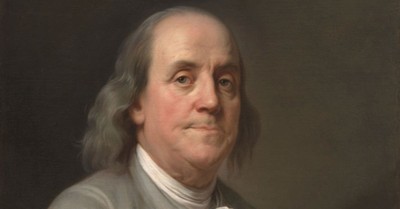
In 1787, Elizabeth Powel—a civic leader in Philadelphia—stopped Benjamin Franklin as he was leaving the Constitutional Convention and asked, “Well, Doctor, what have we got, a republic or a monarchy?” “A republic,” Franklin replied, “if you can keep it.”
Franklin’s remark is worth recalling as we remember Constitution Day on Sept. 17, the day delegates signed the Constitution. A republic means “We the People” govern through elected representatives according to the design laid out in that document. America’s Constitution is the world’s oldest written constitution that is still in effect and has long been a model for other nations.
Writing constitutions is common. Keeping them is not. There are approximately 200 national constitutions worldwide, with Kazakhstan being the most recent, having adopted a new one just this year. Among the unique aspects of the U.S. Constitution is that it is rooted in timeless ideas, such as the aim to “establish Justice,” a goal going back to at least Plato’s "Republic." The Constitution’s structure also recognizes the enduring realities of human nature.
But many constitutions contain similar language. What Benjamin Franklin’s challenge made clear is that nations require stewardship. Each new generation of Americans must, in a sense, answer the question posed by Alexander Hamilton in the first "Federalist Paper," the first of 85 newspaper articles written by Hamilton, James Madison and John Jay, to convince citizens to ratify the Constitution. As Hamilton put it, each generation must “decide the important question, whether societies of men are really capable or not of establishing good government from reflection and choice, or whether they are forever destined to depend for their political constitutions on accident and force.”
To properly celebrate the Constitution takes more than a day of annual remembrance. Each generation must intentionally steward it. Specifically, three distinct elements of American constitutionalism require the attention of its citizens to ensure that its principles endure.
First, the Constitution rests on a sacred understanding of human dignity. The Declaration of Independence, the Constitution’s philosophical basis, highlights the Creator/creation distinction, honoring humans as sacred beings with God-given rights. At the same time, the Constitution acknowledges that man is also fallen and imperfect; thus, its checks and balances are practical and necessary. As Madison wrote:
What is government itself, but the greatest of all reflections on human nature? If men were angels, no government would be necessary. If angels were to govern men, neither external nor internal controls on government would be necessary.
Second, we must steward not just liberty but ordered liberty. Scholar Vincent Phillip Muñoz explained it this way:
…the Founders did not conceive of the rights-bearing individual as an unencumbered, autonomous self. The Founders understood the human person to have rights on account of our God-given reason and freedom. These essential attributes of human nature establish both the grounds of our rights and their limits. The human person as a rights- and duty-bearing individual was understood to be a part of the Creator’s moral order and therefore morally subject to the natural law that governs that order.
“Ordered liberty” is not about autonomy or license to live as one wishes. Rather, it is about the freedom to pursue and live a virtuous life. Thus, former Supreme Court Justice Anthony Kennedy had it completely wrong when he wrote that “At the heart of liberty is the right to define one’s own concept of existence, of meaning, of the universe, and of the mystery of human life.” An ordered liberty reflects that man was created for a higher end than his passions. Christians understand that end as “glorify[ing] God, and to enjoy[ing] Him forever.”
Third, we must steward robust pre-political aspects of our life together, especially family, church and volunteer associations. Only if these institutions are alive and healthy can they maintain a buffer between citizens and the state, while reducing the heavy load on the republic we are duty-bound to keep.
These institutions are what Edmund Burke called the “little platoons” of civil society, which provide an essential role in nurturing individuals and promoting the common good. As Chuck Colson himself wrote, these little platoons,
. . . create the arenas where virtue is best cultivated: both the disposition to be good and the impulse to do good. The little platoons are the roots of social order—schools in citizenship, where the art of self-government is practiced.
Put simply, the Constitution is an experiment that needs to be stewarded. If not, our republic will be lost, along with the sacred understanding of humanity that undergirds it. Christians, of all people, should take that responsibility seriously, since we understand life to be primarily a response to God, who made the world and people as He did. We take seriously the words of Leviticus that were also inscribed on the Liberty Bell, to “proclaim liberty throughout the land.”
Photo Credit: ©GettyImages/Heritage Images
John Stonestreet is President of the Colson Center for Christian Worldview, and radio host of BreakPoint, a daily national radio program providing thought-provoking commentaries on current events and life issues from a biblical worldview. John holds degrees from Trinity Evangelical Divinity School (IL) and Bryan College (TN), and is the co-author of Making Sense of Your World: A Biblical Worldview.
The views expressed in this commentary do not necessarily reflect those of CrosswalkHeadlines.
BreakPoint is a program of the Colson Center for Christian Worldview. BreakPoint commentaries offer incisive content people can't find anywhere else; content that cuts through the fog of relativism and the news cycle with truth and compassion. Founded by Chuck Colson (1931 – 2012) in 1991 as a daily radio broadcast, BreakPoint provides a Christian perspective on today's news and trends. Today, you can get it in written and a variety of audio formats: on the web, the radio, or your favorite podcast app on the go.


